ClueDay: Use Every Clue and Letter
ClueDay gives you one clue and a six-letter word board. A wrong guess adds another clue and letter feedback. You have five guesses, so each attempt should test an idea about the answer.
Read the clue as a hint, not a command
The first clue may describe the answer indirectly. Think of more than one six-letter possibility before entering a word. A guess should fit the clue and give useful letter information if it is wrong.
Use the colored letters
After an incorrect guess, inspect the board and keyboard before reading the next clue. Keep letters that the feedback supports and avoid repeating letters the game has ruled out. Then combine that evidence with the new hint.
Do not spend a guess unchanged
If a new clue arrives, revise the candidate word. Repeating the same idea in a near-synonym wastes one of five rows unless the letter feedback gives you a concrete reason to try it.
Recognise the board
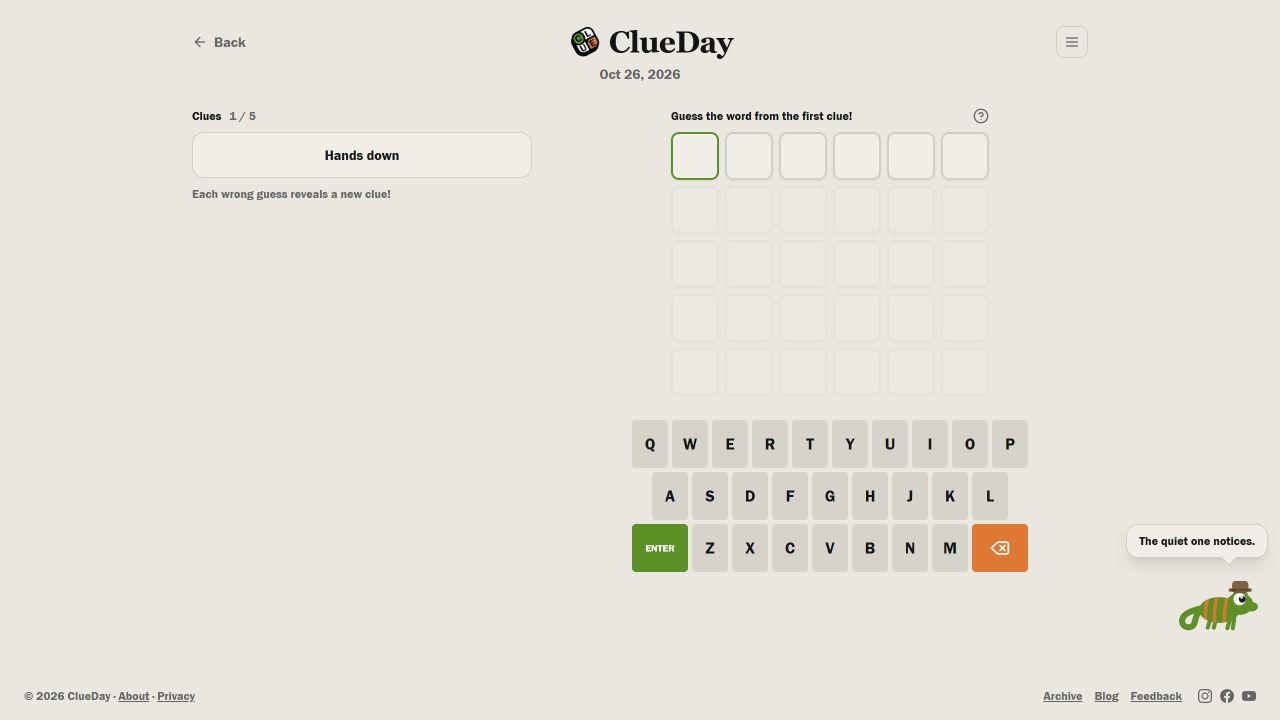
The captured screen shows the clue on the left, six empty tiles across the first row and a keyboard below. The “Clues 1/5” label tracks the hint sequence. The daily answer itself changes, but this method works on any round.
Separate two kinds of evidence
The written clue describes the meaning of the answer; colored tiles constrain its letters. Use both. A word that matches only the clue but conflicts with the tiles is no longer a strong candidate.
When stuck between candidates
Choose a six-letter guess that tests the letters on which the candidates differ, while still making sense for the current clue. The next feedback then narrows the remaining possibilities.
Next-round checklist
- List two six-letter candidates from the clue.
- Use tile feedback after every guess.
- Combine the new clue with the remaining possible letters.
Keep this handy
Use the game page for the original play link and captured screens, or choose another guide for a different scoring style.